A Beacon of Orthodoxy on German Soil.
(On the 40th Anniversary of the Blessed Passing of Archbishop Filofei [Narko] of Berlin and Germany)
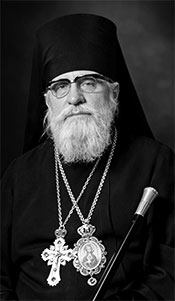 September 24, 2026, will mark 40 years since the blessed passing of Archbishop Filofei (Narko) of Berlin and Germany — an outstanding archpastor of the Russian Orthodox Church Outside of Russia, a confessor of the Orthodox faith, and one of the most prominent church figures of the Russian emigration in the 20th century. His life became an example of selfless service to Christ, love for the Church, and pastoral care for thousands of Orthodox people scattered far from their homeland. September 24, 2026, will mark 40 years since the blessed passing of Archbishop Filofei (Narko) of Berlin and Germany — an outstanding archpastor of the Russian Orthodox Church Outside of Russia, a confessor of the Orthodox faith, and one of the most prominent church figures of the Russian emigration in the 20th century. His life became an example of selfless service to Christ, love for the Church, and pastoral care for thousands of Orthodox people scattered far from their homeland.
Archbishop Filofei was born with the name Vladimir Evdokimovich Narko on March 6, 1905, in the village of Zanaroc in the Vilna Governorate, into a devout family of a village psalmist. Growing up at home surrounded by a church atmosphere from an early age instilled in him a deep love for worship and the Holy Scriptures. After studying at the Vilnius Gymnasium, he entered the Vilnius Theological Seminary and later graduated from the Faculty of Theology at the University of Warsaw, gaining a solid theological education.
In 1928, the young theologian took monastic vows under the name Filofei at the ancient Yablochinsky Onufry Monastery and was ordained a hieromonk. Even back then, his contemporaries noticed his rare combination of spiritual focus, meekness, and extraordinary diligence. He devoted himself to the monastic life, teaching the Law of God, and pastoral work, aiming above all to lead people to Christ.
The years of World War II proved to be particularly trying. In November 1941, Archimandrite Filofei was consecrated as Bishop of Slutsk, Vicar of Minsk Diocese, and soon afterward he took charge of the Mogilev and Mstislav Dioceses. Under the extremely difficult conditions of the war, he had to not only manage the dioceses but also temporarily take responsibility for leading the Belarussian Orthodox Church. Despite the political upheavals of the era, the main focus of his service remained the restoration of churches, the revival of liturgical life, and the spiritual guidance of the people. Historians note that the bishop's activities are viewed ambiguously due to the extraordinary circumstances of the occupation period, but his church service and pastoral zeal remain an important part of the history of Orthodoxy in Belarus.
In 1944, along with thousands of Orthodox refugees, the hierarch ended up in Germany. For many exiles, the Church became their only home, and the archpastor was a spiritual father. In 1946, he joined the episcopate of the Russian Orthodox Church Outside of Russia and was appointed administrator of the Hessen Vcariate, and later the North German Vicariate of the German diocese.
For a quarter of a century, he tirelessly built up church life among the Russian, Belarussian, Ukrainian, and Serbian emigrants, opened new parishes, restored churches destroyed by war, took care of the clergy's education, and preserved Orthodox traditions in German lands.
On September 14, 1971, by the decision of the Council of Bishops of the Russian Orthodox Church Abroad, Bishop Filofei was elevated to the rank of archbishop and appointed as the Ruling Bishop of the Berlin and German Diocese. His leadership was led during the years of the diocese's spiritual revival: monastic life was being strengthened, Orthodox publishing developed, missionary activity expanded, and the German parishes became true centers of Orthodox culture for new generations of emigrants.
A special place in Archbishop Filofei's biography is held by his public service in the cause of peace and understanding among peoples. The Archbishop was deeply respected not only among Orthodox Christians but also in the government circles of the Federal Republic of Germany. His many years of work in the spiritual guidance of society, the development of interchurch dialog, and the strengthening of trust between Russians and Germans received the highest recognition: in 1982, Archbishop Filofei was awarded the Order "For Merit to the Federal Republic of Germany" — the only federal state award of Germany, given to individuals who have made an exceptional contribution to the welfare of the state and society. For an Orthodox bishop of the Russian diaspora, this kind of recognition was truly a unique event and a testament to the fact that his service was seen as a great work of Christian peacemaking and moral building.
The last years of his life were overshadowed by serious illness. In 1982, due to his health, the Archbishop retired, passing the leadership of the German diocese to his successor. Yet even in weakness, he continued to be a man of constant prayer, welcoming his spiritual children and strengthening them with words of pastoral comfort.
On September 24, 1986, in Hamburg, Archbishop Filofei peacefully passed away to the Lord, completing his earthly journey of eighty-one years.
The forty years that have passed only make the significance of his legacy clearer. Archbishop Filofei belongs to that generation of archpastors who managed to preserve the Orthodox faith in exile, turning dispersion not into a tragedy of loss, but into an opportunity to bear witness to Christ before entire nations. His life reminds us of the words of the Gospel: "Let your light so shine before men," for the light of his pastoral service continues to shine in the Orthodox parishes of Germany, in the memory of clergy and laypeople, and in the history of the Russian Church as an example of faithfulness to God, the Church, and his high episcopal calling.
Hieromonk Roman (Kiselev)
|